
Call Now For A Personalized Confidential Consultation!
Hablamos Español
Call Now For A Personalized Confidential Consultation!
Hablamos Español
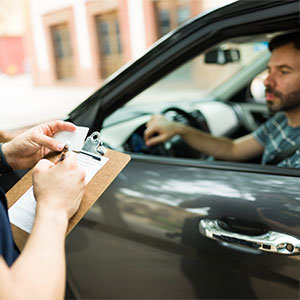
Unless there is an exception, law enforcement will need to obtain a warrant signed by a judge before they can search your car. There are exceptions to this general rule, which includes if consent is given to the search or if law enforcement has probable cause to believe the vehicle contains contraband or evidence of a crime.
Additionally, if the search was pursuant to an inventory search, which is typically when your car is towed, law enforcement will conduct a brief inventory search of the vehicle. These are some of the exceptions in which your vehicle may be searched without a warrant.
Probable cause sounds like some an arcane thought, but probable cause for a drug-related search in California must be predicated on a belief based upon facts and evidence by law enforcement. This means that the search cannot just be based upon a hunch that there’s some kind of criminal activity; there needs to be some articulation of facts and evidence as to what they are basing their decision to search.
A very straightforward example of what would be probable cause is the officer observing controlled substances in a vehicle in plain view, for instance, sitting on the seat. More removed from that would be that if there was some sort of evidence of a drug transaction occurring, and that was observed by the officers.
If law enforcement observed someone getting into the vehicle after a drug transaction, that may constitute probable cause as well. These are just a couple of examples of what probable cause for a drug-related vehicle search could include.
The short answer to this question is yes, unless law enforcement has a warrant. Not only can a person always refuse the search of their vehicle, but in most circumstances, it is probably the best practice to not consent to the search.
Whether or not a warrant is present, you should make it clear that you are not consenting to the search of your vehicle to be sure there is no confusion. This means that even if law enforcement has a warrant or probable cause and you need to let them conduct a search, you can voice your opposition to the search.

Attorney E. Michael Linschied is a seasoned lawyer based in Northern California who has helped countless clients just like you navigate the intricacies of illegal search and seizure law. With 17 years of licensed experience, he is prepared to assist you in advocating for justice so that you can move forward with peace of mind.
Still have questions? Ready to get started? Contact the Law Office of E. Michael Linschied today to schedule an initial consultation.
There’s no requirement to answer questions from police officers during the search of your vehicle in California. However, if you’re required to sign something like a promise to appear, you will need to agree to sign the promise to appear, because failing to do so could result in you being detained and brought before a judge who will order you to appear at a later date.
If you are detained or under arrest, law enforcement must advise you of your Miranda rights prior to any questioning. The Miranda advisement includes and advisement of your Fifth or Sixth Amendment rights against self-incrimination, which is the right to remain silent and your right to an attorney. Ultimately, it is the best practice not to say anything to avoid exacerbating the situation.
If law enforcement conducts an illegal search of your vehicle, any of the drugs or the contraband found in the search can be suppressed in court. The process for suppressing the evidence seized during an illegal search begins when an attorney files a motion to suppress evidence to either be heard as a standalone motion or as part of a motion during the preliminary examination process.
If the search was conducted without a warrant, probable cause, or consent, and was not incident to a lawful arrest or any other exception to the warrant requirement, the evidence will be suppressed. If the evidence is suppressed, the prosecution cannot rely upon the evidence that was seized unlawfully to prove their case against you.
In many circumstances, the suppression of evidence in court will lead to the dismissal of the charges relevant to the suppressed evidence.
It’s not uncommon in my practice that we see individuals’ vehicles or persons being searched without a warrant. I represented an individual somewhat recently for a minor traffic violation. As a result of the traffic stop, law enforcement discovered that there was contraband in the car.
After reviewing the patrol camera, vehicle camera, and body camera footage, I was able to determine that the client did not violate any traffic laws. I filed a motion to suppress evidence in court.
At the hearing, the officer testified as to what he perceived to be the basis for the stop. I presented the video from the patrol vehicle, which did not corroborate the officer’s position that there was a traffic violation. The court ruled in my client’s favor by finding there was not a violation of any traffic laws, subsequently suppressing the evidence obtained as a result of the search of the vehicle.
Ultimately, this resulted in the dismissal of charges against my client.
For more information on Illegal Vehicle Search In California, an initial consultation is your next best step. Get the information and legal answers you are seeking by calling (415) 782-6002 today.
Attorney E. Michael Linschied is a seasoned lawyer based in Northern California who has helped countless clients just like you navigate the intricacies of illegal search and seizure law. With 17 years of licensed experience, he is prepared to assist you in advocating for justice so that you can move forward with peace of mind.
Still have questions? Ready to get started? Contact the Law Office of E. Michael Linschied today to schedule an initial consultation.
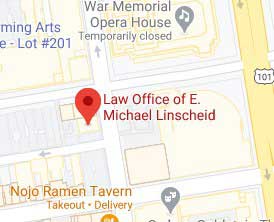
Law Chambers Building
345 Franklin Street
San Francisco, CA 94102
Phone: (415) 782-6002
Fax: (510) 451-2011
Rotunda Building
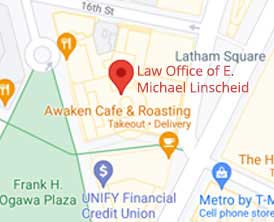
300 Frank H. Ogawa Plaza
Suite 237
Oakland, CA 94612
Phone: (415) 782-6002
Fax: (510) 451-2011

We Accept All Major Credit Cards
Copyright©2026, Law Office of E. Michael Linscheid. All Rights Reserved.