
Call Now For A Personalized Confidential Consultation!
Hablamos Español
Call Now For A Personalized Confidential Consultation!
Hablamos Español
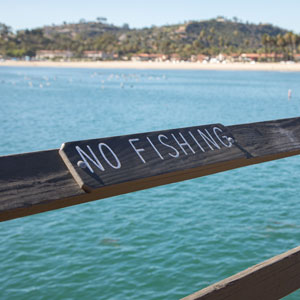
In this article, you can discover…
When you are being questioned by law enforcement, including Fish and Wildlife officers, you have the right to remain silent and a right to an attorney. These are constitutional rights guaranteed by the Fifth and Sixth Amendments of the US Constitution.
However, you don’t have an absolute right to remain silent when confronted by the Department of Fish and Wildlife without threat of allegations of further charges. Fish and Game Code section 2012 states that hunters and fishers are required to display relevant licenses and tags for the birds, mammals, fish, reptiles or amphibians that have been taken. This also includes accounting for any equipment, devices or apparatus that have been used to take the game in question. If you are a commercial fisher, pursuant to Fish and Game Code section 12153, a violation of section 2012 could result in a forfeiture of a commercial fishing license. While it is important to comply with Fish and Game Code section 2012, it is equally important that you limit your communications to only what is required by section 2012.
If you are accused of a violation by a Fish and Wildlife officer, you do have a right to remain silent. If you are facing accusations, it is likely that you will be subject to more than just questioning about what you caught that day. When accusations are on the table, you should refuse to make additional statements and demand to speak with a lawyer.
While you are required to sign any citation by any law enforcement officer, signing a citation is not an admission of guilt. If you refuse to sign your citation, the officer has the right to arrest you for refusing to promise to appear in court, as this is ultimately the purpose of the citation. The officer has the right to enforce your compliance before a judge.

Attorney E. Michael Linscheid is a seasoned lawyer based in San Francisco, CA who has helped countless clients just like you navigate the intricacies of California fish and wildlife law. With over 15 years of experience, he is prepared to assist you in avoiding self-incrimination so that you can successfully navigate your fish and wildlife investigation.
Still have questions? Ready to get started? Contact the Law Office of E. Michael Linscheid today to schedule an initial consultation.
Any statement you make to law enforcement can be used against you as a statement of interest or misinterpreted as a confession. For this reason, it is important to exercise your right to remain silent and avoid making statements while you demand to speak to an attorney. It is not uncommon for people to accidentally provide additional information that they think will be helpful, only to inadvertently make things worse.
As long as the officer knows that they are being recorded, you can legally record any interaction with law enforcement in California. California is a two-party consent state, meaning that both parties must be aware that the conversation is being recorded. Additionally, your recording cannot interfere with the official duties of the law enforcement officer, but it is legal to record your interaction for your own protection.
Oftentimes, clients make the mistake of thinking that they can talk their way out of an investigation rather than remaining silent. This often leads to providing incriminating information that can be used by law enforcement. It is also not uncommon to see clients consenting to searches that end up revealing information that can be used to build a case against them.
Another common mistake, and likely the largest, is making false statements during an investigation. Ultimately, it is better to say nothing at all than to make a false statement that could ultimately jeopardize your ability to fish and hunt in California. Once an officer begins accusing you, it is important to avoid these pitfalls and remain silent until you have a lawyer present.
Still Have Questions? Ready To Get Started?
For more information on Avoiding Self-Incrimination In Fish And Wildlife Investigations, an initial consultation is your next best step. Get the information and legal answers you are seeking by calling (415) 782-6002 today.
Attorney E. Michael Linscheid is a seasoned lawyer based in San Francisco, CA who has helped countless clients just like you navigate the intricacies of California fish and wildlife law. With over 15 years of experience, he is prepared to assist you in avoiding self-incrimination so that you can successfully navigate your fish and wildlife investigation.
Still have questions? Ready to get started? Contact the Law Office of E. Michael Linscheid today to schedule an initial consultation.
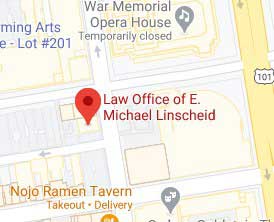
Law Chambers Building
345 Franklin Street
San Francisco, CA 94102
Phone: (415) 782-6002
Fax: (510) 451-2011
Rotunda Building
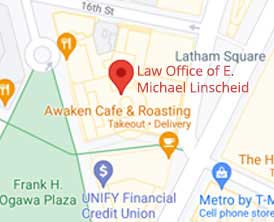
300 Frank H. Ogawa Plaza
Suite 237
Oakland, CA 94612
Phone: (415) 782-6002
Fax: (510) 451-2011

We Accept All Major Credit Cards
Copyright©2026, Law Office of E. Michael Linscheid. All Rights Reserved.