
Call Now For A Personalized Confidential Consultation!
Hablamos Español
Call Now For A Personalized Confidential Consultation!
Hablamos Español

Being accused of shoplifting can feel overwhelming, especially if you’ve never been in trouble before. Understanding how shoplifting charges in Northern California are handled and what options may be available can make a significant difference in how you move forward.
In this article, we address common questions about penalties, court appearances, long-term consequences, and how a criminal defense attorney may be able to help.
In California, shoplifting is generally considered petty theft if the value of the items taken is less than $950. For amounts at or under that threshold, the offense is typically charged as a misdemeanor. The maximum penalties for a misdemeanor shoplifting conviction can include:
Recent changes under Proposition 36, passed in November 2024, increased certain penalties. Courts now have discretion to impose up to two years of court probation, instead of the previous one-year maximum for misdemeanors. Courts may also issue retail theft restraining orders.
California’s Proposition 36 also increased penalties for repeat offenders. If someone has two or more prior convictions for petty theft or shoplifting, prosecutors may file the new case as a felony.
In addition, district attorneys’ offices now have the authority to aggregate or combine the value of items allegedly stolen in separate incidents. If the total value exceeds $950, even if the incidents occurred at different locations, the charge may be elevated to a felony.
One benefit of Proposition 36 is that individuals under the age of 25 may be referred to a rehabilitation program or collaborative court focused on addressing the underlying issues related to the offense.
Any misdemeanor or felony conviction can affect employment opportunities in California.
One unique aspect of California law is that employers generally cannot conduct a background check until after making a conditional offer of employment. This means an applicant for employment is first evaluated on qualifications and merit before a criminal background check is run. After the check, however, the employer may decide whether to proceed with employment based on the results.
If an employer determines that a conviction is disqualifying, they may choose not to retain or hire the individual.
With respect to public schools and universities in California, convictions are not permitted to be considered during the admissions process. However, issues such as housing or student financial aid may still be impacted depending on the circumstances and the type of conviction involved.
If you are charged with a misdemeanor shoplifting offense and retain an attorney, you generally do not need to personally appear in court, as long as your lawyer appears on your behalf. However, shoplifting charges cannot simply be resolved like a traffic ticket: either you must appear, or your attorney must appear for you.
In cases involving multiple prior shoplifting convictions, the matter may be filed as a felony. In felony cases, courts are far less likely to excuse a defendant’s personal appearance. With limited exceptions, felony charges typically require the defendant to be present in court.
A shoplifting charge in California does not always result in a permanent conviction. There are several potential avenues for dismissal, depending on the circumstances.
One option may be a civil compromise. In some cases, if the retail establishment is repaid for its losses, the court may dismiss the charges.
Another possibility is diversion. Individuals with limited criminal history may qualify for judicial diversion or may seek diversion through the prosecution. If the terms of diversion are successfully completed, the charges can be dismissed, and the arrest record may be eligible to be sealed.
Deferred Entry of Judgment is another potential path. Under this arrangement, a person may admit responsibility but be given a set period to remain arrest-free. If the individual complies with the terms and stays out of trouble, the charges may ultimately be dismissed.
Even after a conviction, relief may still be available. Once probation is successfully completed, typically one year for a misdemeanor and two years for a felony, a person may petition the court for expungement. In certain cases, a felony conviction may first be reduced to a misdemeanor and then expunged.
A criminal defense attorney can often improve the outcome of a shoplifting case. They will evaluate the facts and applicable law to determine whether legal defenses exist. In some cases, weaknesses in the evidence or procedural issues may affect how the case proceeds.
A defense attorney can also pursue resolutions that avoid a conviction whenever possible, including:
These outcomes typically require legal knowledge, experience, and negotiation with prosecutors and the court.
While every case is different, having representation can significantly impact the strategy, options, and potential resolution of shoplifting charges in Northern California.
For more information on shoplifting charges in Northern California, an initial consultation is your next best step. Get the information and legal answers you are seeking by calling (415) 782-6002 today.

Michael Linscheid, founder of the Law Offices of E. Michael Linscheid in California, has spent years defending individuals facing misdemeanor and felony charges throughout Northern California. With extensive experience handling shoplifting and retail theft cases, including first-time offenses and repeat allegations under evolving laws like Proposition 36, he understands how prosecutors build these cases and how to challenge them. He has successfully guided clients through diversion, civil compromise, and expungement to protect their records and futures.
If you’ve been accused of shoplifting, contact his office today for strategic, experienced defense tailored to your situation.
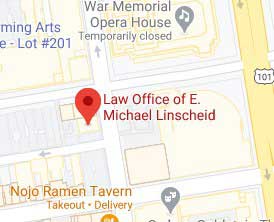
Law Chambers Building
345 Franklin Street
San Francisco, CA 94102
Phone: (415) 782-6002
Fax: (510) 451-2011
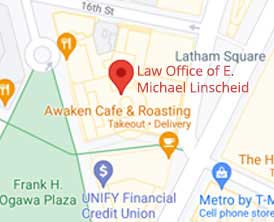
Rotunda Building
300 Frank H. Ogawa Plaza
Suite 237
Oakland, CA 94612
Phone: (415) 782-6002
Fax: (510) 451-2011

We Accept All Major Credit Cards
Copyright©2026, Law Office of E. Michael Linscheid. All Rights Reserved.