
Call Now For A Personalized Confidential Consultation!
Hablamos Español
Call Now For A Personalized Confidential Consultation!
Hablamos Español
In this article, you will discover:
Police can use any information, including text messages, on your cell phone or any other digital device during a narcotics investigation in California to establish evidence of narcotic sales.
Both California and federal law require that law enforcement obtain a warrant to search your phone, even if the search is incident to an arrest.
Regarding cell phones, California Law (Penal Code section 1546.4) specifically prohibits a government entity from accessing electronic information or compelling a provider to produce electronic communications without a warrant. The United States Supreme Court in Riley v, California (2014) 573 U.S. 373 also held that the search incident to arrest exception does not apply to cell phone data. There are some exceptions to that law, but generally a warrant is required to search a cell phone or obtain digital information from the cell phone provider.
Law enforcement typically uses mobile forensic software to search your cell phone. One of the most common software programs is called Cellebrite. Often, though you may have deleted a text message, you didn’t necessarily delete it from the cloud or your phone completely and it is still accessible to law enforcement.
Law enforcement can also access your deleted text messages by obtaining them from the recipient. In many cases, they may not have deleted the message.

Attorney E. Michael Linscheid is a skilled lawyer based in San Francisco and Oakland, California, who has helped clients like you navigate the intricacies of criminal defense law. With years of experience, he is prepared to assist you by building a strong defense that protects your privacy and rights against self-incrimination.
Still have questions? Ready to get started? Contact the Law Office of E. Michael Linscheid today to schedule an initial consultation.
Your phone is a tiny computer containing a world of information that could incriminate you. If law enforcement obtains a warrant, they would have access to all the following information:
Social Media
People put a lot of their information on social media. Therefore, it’s common for law enforcement to use social media posts if they’re alerted by others in the course of their investigation that there’s evidence there, whether photos, videos or comments, that might incriminate you.
Photos or videos on social media or your cell phone have metadata that can basically tell law enforcement where and when the photo was taken. These are specific parameters that may aid in their investigation.
Messaging Apps
You may think that messaging apps, such as WhatsApp, Signal, Facebook Messenger or Snapchat, are private. However, it’s easy for law enforcement to obtain that information by searching your phone or subpoenaing the records from these entities.
Cell phone records or call logs can indicate that you made calls to specific parties and when you made them. Corroboration from the recipient could be enough to tie you to an illegal narcotics sale or some other illegal activity.
Other Digital Evidence
Your internet browser history, phone notes and phone contacts are also powerful evidence, as are service apps such as Cash App, Zelle, or PayPal. Any of these could serve as useful evidence of illegal activity.
There are a variety of attacks against the collection, authenticity, or admissibility of digital evidence that an experienced defense attorney can use to their advantage. Because law enforcement must obtain a warrant to obtain digital evidence, an attorney’s first task is to challenge that warrant.
Suppose a law enforcement officer prepared a warrant that lacked specificity regarding the information to be seized from your phone. That’s one avenue of attack. Another challenge might be that the warrant is overbroad, basically seeking too much information.
Law enforcement isn’t entitled to gather all the information from your cell phone, and they must have probable cause to search it. If the warrant lacks probable cause, that would be an invasion of your Fourth Amendment rights, which protect you from unreasonable searches or seizures, another justification to challenge the warrant in court.
There is also existing case law that supports an individual’s expectation of privacy regarding their location. Specifically, the government can’t track your location through your cell phone without meeting a heavy legal burden.
There’s a high legal burden for law enforcement to obtain a passcode to your cell phone because that would be an invasion of your Fifth Amendment right against self-incrimination.
However, there’s an exception to that rule: using your fingerprint or face to unlock your phone. That’s not considered incriminating, because law enforcement is using your biometric identifier to access your phone as opposed to a statement you’ve made that would incriminate you.
An attorney may also challenge how data was extracted from your phone. The challenge may cite any errors in the extraction process or any alteration of metadata. You can also challenge whether there was proper chain of custody from the moment your phone was seized through the extraction process, which could render any seizure or search inadmissible.
For more information on how text messages can be used as evidence in California, an initial consultation is your next best step. Get the information and legal answers you are seeking by calling (415) 782-6002 today.
Attorney E. Michael Linscheid is a skilled lawyer based in San Francisco and Oakland, California, who has helped clients like you navigate the intricacies of criminal defense law. With years of experience, he is prepared to assist you by building a strong defense that protects your privacy and rights against self-incrimination.
Still have questions? Ready to get started? Contact the Law Office of E. Michael Linscheid today to schedule an initial consultation.
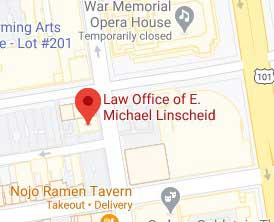
Law Chambers Building
345 Franklin Street
San Francisco, CA 94102
Phone: (415) 782-6002
Fax: (510) 451-2011
Rotunda Building
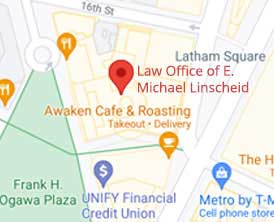
300 Frank H. Ogawa Plaza
Suite 237
Oakland, CA 94612
Phone: (415) 782-6002
Fax: (510) 451-2011

We Accept All Major Credit Cards
Copyright©2026, Law Office of E. Michael Linscheid. All Rights Reserved.